SEEDS
Synergizing Earth's Evolutionary Development Spacewards

Paper IAA-97-IAA-8.2.04 presented at the
48th International Astronautical Congress in Turin, Italy, 1997 (Updated 2005)

Abstract

In nature, the perpetuation and survival of all forms of life are maintained through the process of reproduction. The propagation of a species is the best way for it to survive and thrive in the natural selection process. Viewed from a macro-perspective that includes of all life on Earth, the survival of “LIFE“ itself is also dependent on it reproducing itself in another environment. The environment for Life's survival on Earth is both fragile and endangered. Unexpected cosmic events may also endanger or even terminate its survival chances in the future. The only way for life on Earth to insure its ultimate survival is by it becoming established beyond its home planet. The advent of spaceflight marks the first time in the history of planet Earth that “LIFE“ has developed the means necessary to perpetuate its own survival in the cosmos. That means is the human species with the technological capabilities it has developed. Indeed this may be humanity‘s ultimate purpose as well as its biggest responsibility.

The evolutionary idea that space exploration activities would in effect plant both human and other terrestrial life forms beyond Earth has been an acknowledged aspect of humanity‘s astronautical endeavors since its beginnings. In this paper I introduce the SEEDS project, its background and rationale and outline a plan to organize global participation in a project to develop and send SEEDS payloads into the cosmos.

The Origin of Life on Earth

Besides various religious explanations for the origin of Life on Earth there are two prevailing scientific theories. Brig Klyce (Klyce, 1996) has posted an excellent discussion of these theories on his website located at: www.panspermia.org.

The most popular scientific theory is Neo-Darwinism that incorporates the genetic work of Gregor Mendel into the seminal concepts of Charles Darwin. Neo-Darwinists assume that, under favorable conditions, Life can evolve from non-living material. Evolution is driven by chance, and chance mutations slightly affect the DNA. Bigger changes are the result of recombination, a genetic process in which DNA strands are swapped, transferred, or doubled. The mechanisms behind evolution are mutation and recombination, which create new meaning in DNA through adaptation and the process of natural selection.

The competing theory is called "panspermia". The Greek philosopher Anaxagoras who is believed to have been the teacher of Socrates first scientifically articulated this theoretical concept. It assumes that life is distributed throughout the universe in the form of germs or spores and that the arrival of such microbes contributed to the origin of Life on Earth. These microbiotic elements arrived either via impacting comets or were perhaps even planted here by extraterrestrial alien civilizations.

A more recent version of this theory is called "Cosmic Ancestry" which holds that life on Earth was seeded by bacterial microbes from space and that the genetic programs necessary for the evolution of life come from space. Evolution is programmed into these genes in order to lead to ever-higher organisms.

British astronomers Hoyle and Wickramasinghe announced in the 70's that interstellar space contains "organic compounds" and that comets could transport such compounds over the large distances of the universe and even protect them from the hazards of UV radiation. Recent scientific discoveries of ancient bacteria having survived hostile environments both here on Earth and in space lend credence to the theoretical speculations.

Astrobiology is the term NASA has given to its new program to scientifically study the origin, distribution, evolution and future of Life in the universe. Planned are an Astrobiology Institute and a broad range of activities embracing basic research, technology development and flight missions. Astrobiology will help scientists understand the future course of Life on Earth and, eventually, help develop a self-sufficient oasis for terrestrial Life on another planet. NASA expects public interest in this initiative to play a major role in its efforts to communicate the excitement of space exploration to the general public (Morrison, 1997).

Why Humanity?

Not only today, but throughout millennia humanity has wondered about its relation to the cosmos and about its ultimate purpose. Based on existing knowledge, myths, religions, and other models of thought were created to try to satisfy its ignorance of the answers to these fundamental questions of existence. As knowledge increased, all these models of thought were modified or replaced by newer ones in order to have a more precise and believable explanation of where we came from, who we are and what our purpose is.

Modern science has pointed out that, regardless of how Life originated, every living organism on Earth is, in some sense, connected to and dependent upon the rest of life sharing the planet. Of these, the human species appears unique in that it alone can contemplate its existence, examine its past and look ahead to its future. Our species has also developed the means to look beyond Earth into the universe and has yet to find any hard evidence of Life, as we know it.

Although humanity is considered to be an essential part of nature, the overwhelming success of our species poses a great threat to the rest of Life sharing this planet. There is no need to list the many problems facing humanity as it enters the next century. Be they environmental, ecological, political, economic or social, the problems are obvious, immediate and threatening. Most of these problems can be linked to the ever-expanding activities of the human species that has resulted in it occupying every available niche and exploiting every available earthly resource for living, working and maintaining society.

Just 10,000 years ago there were only about 5 million people on the planet living, at that time, mostly in caves. For these people planet Earth was surely the entire cosmos. 8,000 years later, there were 130 million people around when Christianity was born. By 1650 the human population grew to about 500 million. 200 years later, at the beginning of the industrial age, it doubled to 1 billion. Our planet still seemed large enough and resilient enough to support any human purpose. 100 years later, the number of humans increased to 2.5 billion. At this time, a new development appeared - all of humanity as well as all of Earth's inhabitants began living with the threat of nuclear destruction hanging over their future.

Now there are approximately 6 billion busy humans living, working and playing on a very crowded and ecologically endangered planet. The mothers of the next 2 billion people have already been born and by the year 2020 there will be at least 8 billion people sharing the planet with the rest of Life that hasn't yet been pushed to extinction by human expansion.

With the human population presently growing at a rate of almost 100 million human beings per year and as more and more species are becoming extinct at an alarming rate, is it not too soon to ask a fundamental question:

"Has humanity - and indeed, all terrestrial life - outgrown its home planet Earth?"

What is going on?

Viewed from an evolutionary perspective of nature, a possible explanation for the pervasive dominance of the human species over the rest of nature, for its technological prowess, for its insatiable curiosity, for its creativity as well as for its unrelenting exploitation of its habitat in order to satisfy its needs, is that - Life on Planet Earth must need this kind of species to enable its own evolution and eventual reproduction. Every living organism is programmed to reproduce its genes. This is a fundamental aspect of nature and only in this way does the survival of the species have a chance in the competitive world that nature has designed. Viewed from this perspective and measured against the enormity of the cosmos, it appears that an evolutionary opportunity for Planet Earth has just arrived.

In less than 200 years our planet has unleashed the vast energy reserves that organic Life has carefully produced and stored over hundreds of millions of years in order to give rise to the mechanisms - humanity and technology - that are necessary to carry and to plant its seed beyond Earth. Birth always involves some risk to the mother and this risk is an essential aspect of nature and evolution. However, when the embryo becomes too large for the womb and its environment becomes increasingly polluted, it is time for the infant to be born.

As all life on Earth is interdependent and interrelated, and as the fundamental purpose of all living organisms is to promote their survival through propagation, it is logical to believe that terrestrial Life itself is in some way programmed to insure its survival and to preserve its genetic heritage by engineering the means to plant its seeds elsewhere. Perhaps, even giving birth to another Earth-like planet.

Only in this way can Life on Earth avoid the possible extinction that could be inflicted on itself by a species that has managed to unlock the power of the Sun, or survive the destruction of the home planet caused by a massive collision from a comet or a large asteroid, or escape certain incineration by the eventual death of our star - the Sun.

Terrestrial Life growing somewhere else besides on planet Earth would be an insurance that Life, as we know it, will indeed continue to survive and perhaps even thrive in the cosmos. Thus, the human species and its remarkable civilization at the beginning of the 21st century represent the first opportunity for our planet to procreate. While it may be argued that Life is resilient enough to survive humanity, however, Life may not survive indefinitely without humanity's assistance.

Mother Earth has Come of Age

Earth has come of age and it is now time for it to sow its seeds throughout the cosmos in the hope that one or more of them will catch, begin to grow and flourish as Life has here. It has taken planet Earth 4.5 billion years of time to reach this opportune moment. To become the "midwife" of Earth's seeds, humanity has undergone over 2 million years of evolution capped by the last 200 years of accelerated technological development and some 35 years of spaceflight experience.

The persistent flow of information about the deteriorating state of the biosphere and the alarming loss of biodiversity adds a sense of unprecedented urgency to the present situation. Having recently witnessed the impact of a massive comet crashing into Jupiter we are aware that cosmic catastrophes can and do happen. Knowing that they’re a still many thousands of nuclear weapons pointed at our future is stark evidence that such a catastrophe need not be cosmic. Yet, even without a nuclear war there are many other scenarios in which humanity is becoming a threat to itself and to the future of all life on Earth.

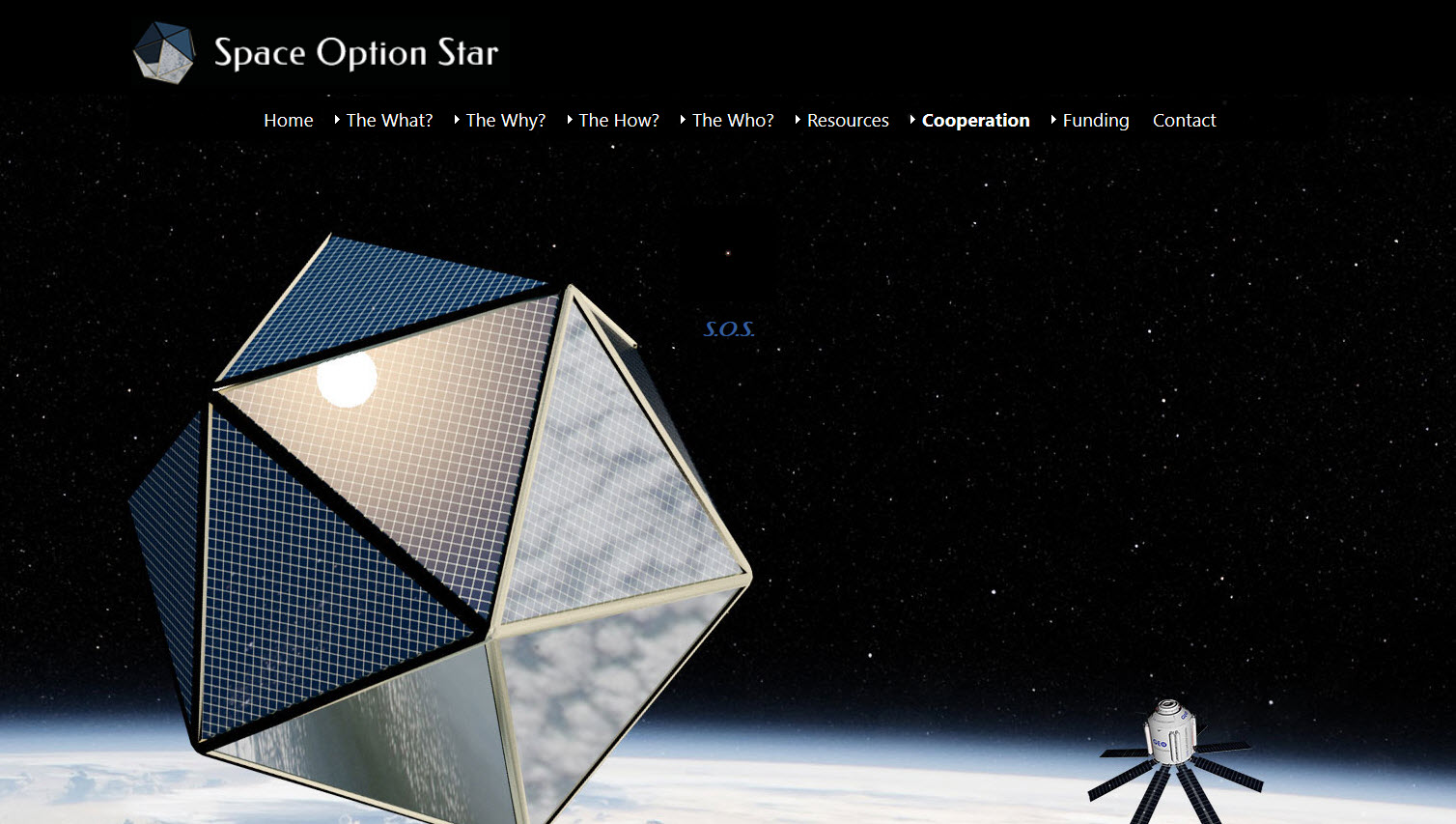
To perpetuate our present civilization and indeed to promote the survival of humanity, we have developed the concept we call "The Space Option" (Bernasconi and Woods, 1993), which has been discussed in various publications (www.ours.ch). The Space Option is an evolutionary plan to utilize the enormous resources of space to meet both the growing needs of humanity and to promote the well being of all Life on Earth. As such, it is an optimistic solution (perhaps the only optimistic solution) to many of the problems facing humanity and all Life on Earth as we begin the next century.

Implementing the Space Option will require the creation of an expanding infrastructure in space - and where humanity goes, it would surely take the "seeds of life" from planet Earth with it. However, despite all of the available information and the attractiveness of this concept, experiences of members of our organization being involved in ESA working groups about the future of space, as well as the lack of any commitment by any space agency to research the concept in detail, "The Space Option" has not yet been embraced by the space agencies. Even if they did, I believe that current political and environmental interests would prohibit its implementation. As long as there is money to be made burning the remaining oil, the urgency of the problem is not appreciated.

Indeed the "window of opportunity" for the implementation of the Space Option is, in our opinion, rapidly closing - in a few months Earth's population will hit 6 billion. The human expansion into space - the dreams of the early space pioneers, the motivation of many space professionals - and the future for our children - seems less likely than ever to take place.

Thus, as the future of Life from Earth in space may not necessarily be a "human future", and as it is imperative that Life from Earth become established beyond its home planet in order to insure its ultimate survival, a program to sow the "Seeds of Earth" should be initiated as soon as possible. This very moment may be Earth's one and only chance to do so.

The Technical Issues

The technologies for seeding the cosmos can be narrowed down to three basic scenarios. The first and most obvious is the human colonization of near space. The second scenario entails robotic seeding missions, i.e. "seed“ carrying spacecraft launched from Earth. The last scenario proposes using comets to carry "seeds" to other reaches of our galaxy.

From the human perspective space colonization is definitely the most attractive, apparently pragmatic and most romantic idea. Besides the reasons mentioned earlier about the lack of enthusiasm for utilizing space resources to promote the survival of Life on Earth to make the case for using space resources to promote Life off Earth may sound like a paradox. However, there are other considerations. The main consideration is the expense and difficulty of establishing a viable self-supporting human colony anywhere beyond Earth, even within our own solar system. Also, the cosmic impact of this method as an appropriate approach to "seeding" would be minuscule and subject to many of the same influences that currently affect the future of humanity on its home planet.

Robotic missions offer the most immediate approach. At this moment there is a robot moving around on the surface of Mars photographing its surroundings and delivering remarkable images and other information from the surface of the planet. It could as well be boring holes and planting seeds if this was practical. Another robot is surveying Mars from orbit and mapping its features. Earlier robots, Voyager 1 and 2 are on their way out of the solar system with plaques on board explaining the location and type of Life from the planet they left behind.

In the deserts of Mars, the likelihood that Pathfinder's limited range of operations and capabilities will discover life on the red planet or will plant a garden - if it could - are very small. In the vastness of the cosmos, the chances that the Voyager or similar untargeted spacecraft will ever encounter another place as conducive for Life as the place that sent is also extremely remote.

Using our powerful astronomical technologies to identify relatively near cosmic locations that exhibit what we believe to be conditions for life is not beyond imagination. A few years ago,we participated in a study organized by John Hopkins University to build an inflatable telescope designed to detect Earth like planets (P. Y. Bely, C. J. Burrows, F. J. Roddier, G. Weigelt & M. C. Bernasconi, 1992). The Hubble Space Telescope is returning fascinating images from distant parts of our cosmos that have stimulated speculation and further studies. Maybe SETI will one day make "contact" in one form or another.

Michael Mautner has suggested that it would be possible to initiate a program to design a type of low cost solar sail spacecraft that could be produced in large quantities so that cost per spacecraft would be in the $10,000 range (1000 = $10,000,000) (Mautner, 1995). Thousands of these could be deployed with robotic seeding systems to likely destinations within several light years from Earth. As an example of the benefits of mass production, the German V-2 rocket was mass-produced by the thousands at a cost of $13,000 per vehicle (Walker, 1993). Concepts for ultra-light solar sail missions are today under study as well as other forms of interstellar propulsion using microwaves, lasers, or a combination of fission and fusion using anti-matter as a catalyst (David, 1997).

What could be a more appropriate payload on such missions than "seeds of life" from Earth? Such a program of directed panspermia, or as Mautner more appropriately calls "directed panbiota", would have to be very coordinated and concentrated. Robotic spacecraft sent on interstellar missions could contain more advanced forms of the genetically engineered biological materials - even one or multi-celled organisms which could maybe jump-start the evolutionary processes by billions of years.

A third scenario is to implant bacteria and viral matter on the surfaces of comets and use these space voyagers to take our "seeds" to other places. We have demonstrated our ability to rendezvous spacecraft with a comet and this technique can surely be improved. The initial quantities of microbes could be small - the process of replication would initiate when the comet eventually encounters the right environmental conditions. Of course, it is difficult at the moment to accurately predict the appearance, origins and destinations of comets so the chances of success would probably be very small.

Other important elements in this discussion of the technological issues are the recent advances in both computer and genetic engineering. There is no need to describe the former as its developments and breakthroughs are being reported almost daily in the media. One truly significant and related development is the recent explosion of Internet as a global communication and marketing environment.

Developments in genetic engineering, especially those having to do with "cloning" sound as though they come from a science fiction novel, but they are indeed a reality. Genetically engineering microbiotic organisms to be extremely adaptive to a wide range of environments would be an essential aspect of directed panbiotic missions.

The Ethical Issues

The idea of seeding the cosmos will not be popular with everyone. Religious opposition can be expected. "Does humanity have the moral right, to interfere, to contaminate or even pollute other cosmic environments?" will be a question that will surely be raised. Some scientists will not want their investigations of Moon or Mars contaminated with biological input from Earth. Some of these objections can be avoided by searching for target environments where the processes of Life are not apparent or haven't had the opportunity to begin, such as, young or still forming solar systems (Mautner, 1995).

MacNiven has pointed out how various schools of environmental ethics - homocentric, zoocentric and biocentric would respond to terraforming Mars. Each of these could morally permit such an activity because they are all Earth-centered. However, a "cosmocentric ethic", recognition of the intrinsic value of all cosmic entities - could pose a moral problem for a program of "directed panspermia" (MacNiven, 1995). Mautner suggests that a "panbiotic ethic" must emerge in which "good" is what promotes Life and "evil" is that which destroys or endangers Life.

As it is now feasible for Life on Earth to leave its home planet and to propagate in the cosmos and, as humanity has evolved in such a way to make that possible, the overriding argument may be: Does humanity have the moral right "not" to assist the spread of Life beyond Earth?
This moral decision may be the most important one that humanity will ever make. Making this decision may be as important as its consequences.

The SEEDS Project

"SEEDS: Synergizing Earth's Evolutionary Development Spacewards"


The SEEDS concept was an idea that entered my work in or around 1990 and a project was initiated in 1995. The purpose of the SEEDS project is to initiate a realistic program to develop and send artistic payloads containing organic material into space called: SEEDS. This effort is conceived of as an art project in order to have some latitude in its process of development and implementation. The first realizations in space may be more symbolic than realistic. However, these efforts will serve to promote publicity for the concept as well as to build experience and to accumulate data.

Proposals to include "SEED" payloads on space missions will be developed. These may be micro-payloads that can be integrated into structural elements of the spacecraft with little or no weight, cost or technical penalties. Again the purpose would be to gain exposure and experience.

In 1995 I made the first public presentation of the project at the 46th International Astronautical Congress in Oslo, Norway (Fig. 1. & 2). Other exhibitions of the project have taken place in various art galleries.

seeds installation oslo
Figure 1. SEEDS Installation 46th IAF Congress, Oslo


Figure 2. SEEDS Installation 46th IAF Congress, Oslo

In September 1997, artworks with the title "SEEDS for Mars" were included in an exhibition called "Life on Mars" at ESTEC in Noordwijk, Holland (Fig.3).

Figure 3. SEEDS for Mars

A few private proposals to incorporate "SEEDS" payloads into missions being planned for orbit and to the Moon have already been made to the scientists working on these missions (Fig. 4.). (EuroMoon Proposal - 1997)

Figure 4. EuroMoon SEED

Figure 4. EuroMoon SEED

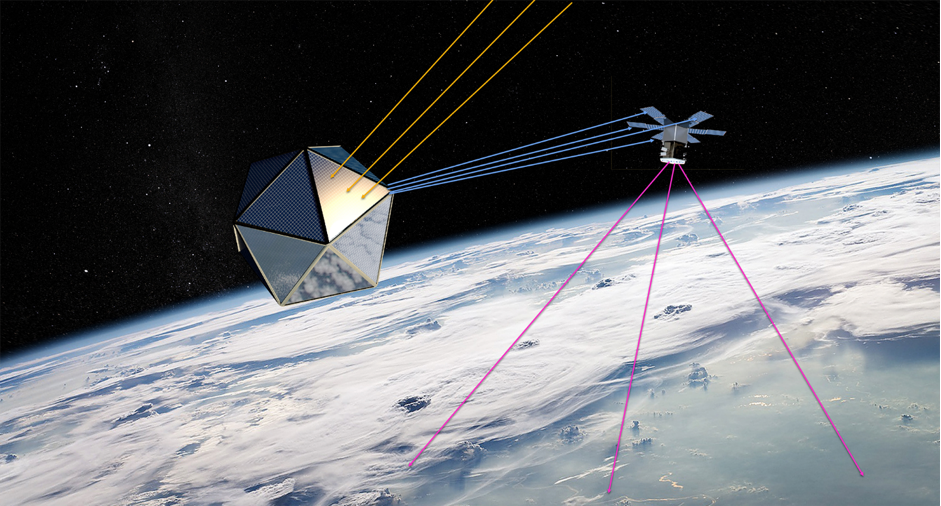
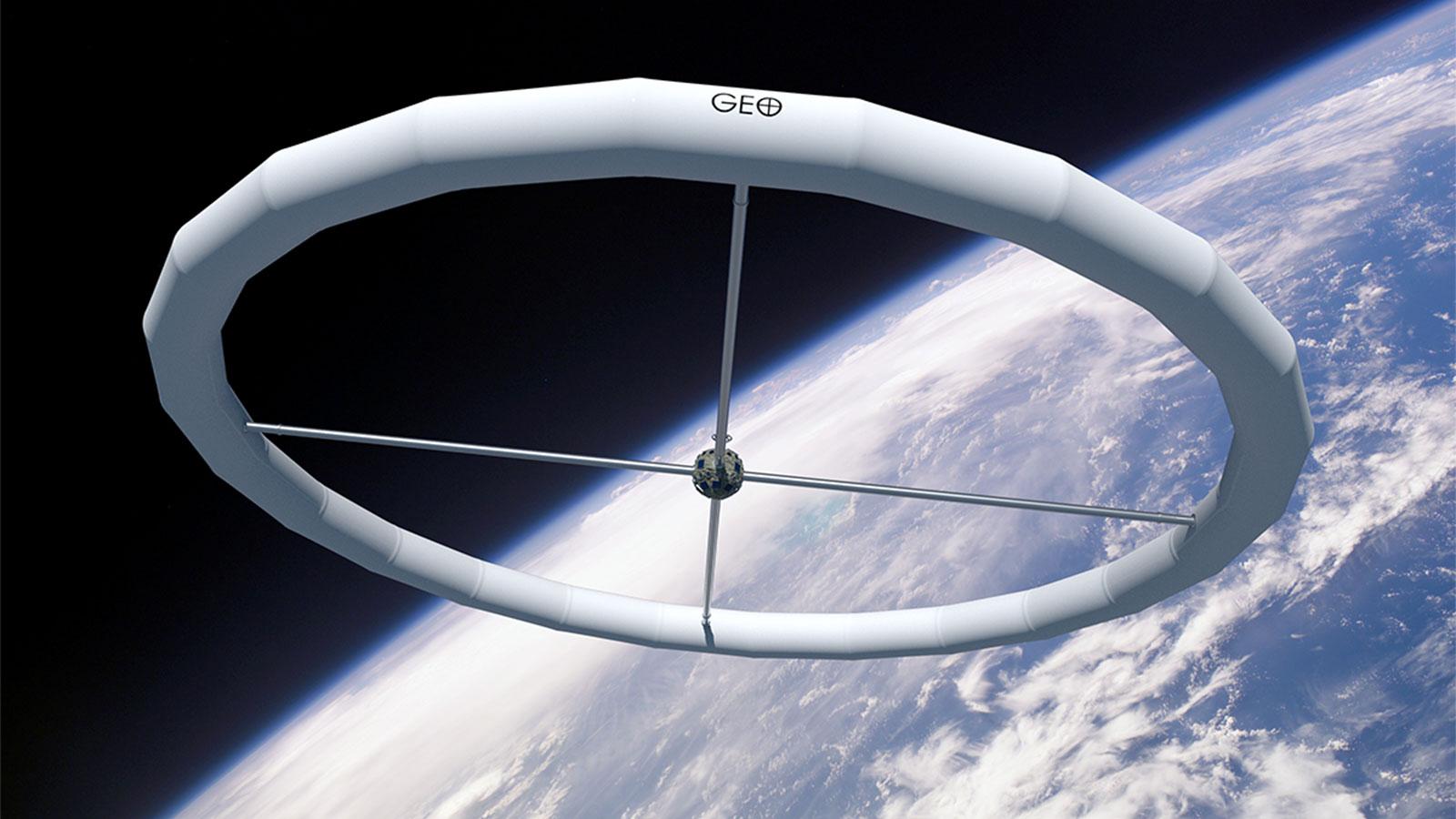
I have also proposed a "Millennium SEED" - a large inflatable object placed in Earth orbit that would be visible to all humanity as a blinking star (Fig. 5). Such an object would be designed to return to Earth a thousand years from now carrying with it the "seeds" of our time - in case it becomes necessary to "reseed" Earth in order to maintain life in this part of the cosmos. I have suggested depositing "SEEDS" on the Moon for these same reasons.

Figure 5: Proposed Millennium SEED

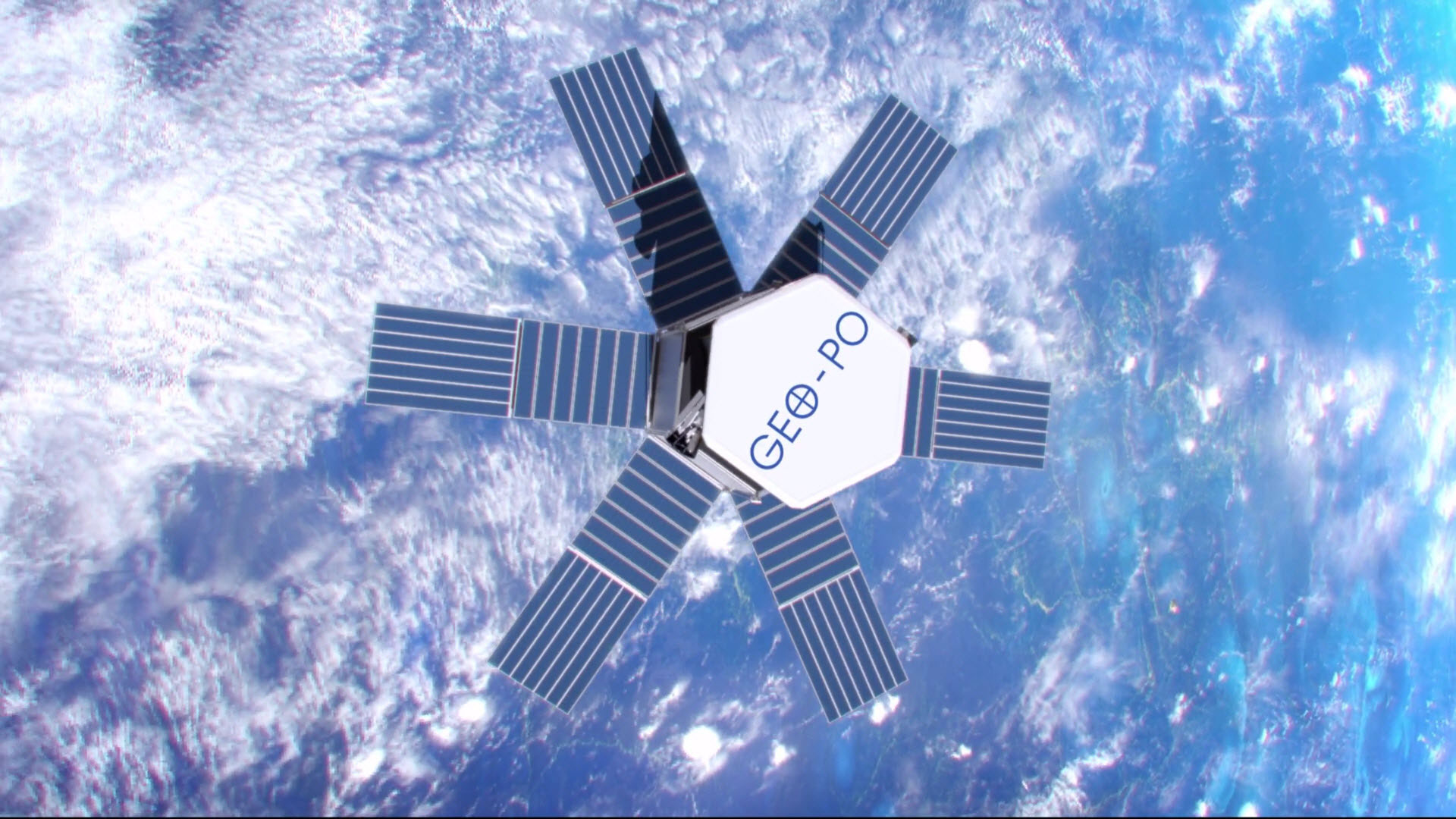
At this stage, rather than developing specific missions or projects, my approach is to look for opportunities for spaceflight that are inexpensive, educational and have communication potential. Perhaps one day we will be able to build a solar sail SEED craft like the one pictured in Figure 6.

Figure 6. Cosmic SEED – Solar Sail Spacecraft

A SEEDS website will be dedicated to developing the concept through various forums as well as categorizing and integrating information related to the project.

Already mentioned was the information rich site that has been created by Brig Klyce at: http://www.panspermia.org.

Another exquisite website called "The Seeds of Life" run by Françoise Brenckmann. It can be seen at:
http://perso.wanadoo.fr/jmh/seedsoflife/.

Michael Mautner maintains a website for his Society for Life in Space (SOLIS) - http://www.panspermia-society.com

Whereas NASA believes that their Astrobiology program will be a vehicle for communicating the "excitement" of space exploration, I believe the SEEDS project can help focus humanity on the ecological and survival benefits of space development and exploitation. Focusing on issues of evolution and the survival of life may be a strategic way to catalyze the needed discussion concerning the Space Option concept and its promise for the future of humanity. Presenting space development in an ecological and ethical context could be the keys we are looking for.

Conclusion

Life on Earth may have originated by an intervention from space or it may have begun spontaneously. Sooner or later Life on Earth will cease to exist. Accepting the processes of nature on our planet as a model, the questions: "How did Life originate on Earth?" or "How endangered is Life at the moment?“ may not be as important as understanding that Life's chances for survival can only be enhanced by promoting its propagation beyond Earth. Today, Life on Earth has reached a point in its evolution where it is feasible for it to propagate in other parts of the universe. The arguments for spreading Life are certainly more compelling than the arguments for not doing so. Life's expansion into the cosmos may or may not include humans but humans are essential for that expansion to happen. By accepting the responsibility to help propagate Life beyond the home planet, humanity could be fulfilling its ultimate purpose. If so, then the SEEDS project may help to synergize Earth's evolutionary development spacewards.

References

  1. 1996-1997 Brig Klyce, Cosmic Ancestry, www.panspermia.org
  2. 1997 David Morrison, The Promise of Astrobiology, Space News, Vol. 8 No. 34, pp. 13
  3. 1993 Marco C. Bernasconi & Arthur R. Woods, Implementing the Space Option: Elaboration and Dissemination of a New Rationale For Space. (Parts 1 & 2) - Paper IAA.8.1-93-764 presented at the 44th International Astronautical Congress, Graz, Austria. October 16-22.
  4. 1995 Arthur R. Woods & Marco C. Bernasconi, Choosing A Space Age Or A Stone Age, Space News, Commentary, October 2-8.
  5. 1990-1996 Publications of the O.U.R.S. Project, www.ours.ch
  6. 1992 P. Y. Bely, C. J. Burrows, F. J. Roddier, G. Weigelt & M. C. Bernasconi, SISTERS: A Space Inferometer for the Search for Terrestrial Exo-Planets by Rotation Shearing. Paper presented at the ESA Colloquium on Targets for Space Based Interferometry; also SPIE Proceedings.
  7. 1995 Michael N. Mautner, Directed Panspermia. 2. Technological Advances Toward Seeding Other Solar Systems and the Foundation of Panbiotic Ethics. Journal of the BIS, Vol. 48, pp. 435-440. See also: Society for Life in Space (SOLIS) - http://www.panspermia-society.com
  8. 1993 John Walker, A Rocket a Day Keeps the High Costs Away, www.fourmilab.ch
  9. 1997 Leonard David, Report: Propulsion Key to Interstellar Exploration, Space News, Vol. 8 No. 34, pp. 17
  10. 1995 D. MacNiven, Environmental Ethics and Planetary Engineering. Journal of the BIS, Vol. 48, pp. 441-445
  11. 1994 Arthur R. Woods, Art In Space: The Spaceflight of the Cosmic Dancer Sculpture - Article published in Earth Space Review. Vol. 3. No. 2. April-June. Also cover of same issue. Also: http://www.cosmicdancer.com
  12. 1995 Arthur R. Woods, Ars ad Astra: A Cultural Experiment on EUROMIR 95, Paper IAA-95-IAA.8.2.04 presented at the 46th International Astronautical Congress, Oslo, Norway, October 2-6. Also: http://www.arsadastra.com

Publications about the SEEDS project:

  1. 1997 Arthur R. Woods, SEEDS - Synergizing Earth's Evolutionary Development Spacewards, Paper IAA-97-IAA.8.2.04 presented at the 48th International Astronautical Congress, Turin, Italy Oct. 6 - 10, 1997. Download PDF

space quotes...

"This is the goal: To make available for life every place where life is possible. To make inhabitable all worlds as yet uninhabitable, and all life purposeful."
 
Hermann Oberth