Cosmic Stones
Will humanity’s future be a “Space Age” or a “Stone Age”? The human species has reached a pivotal point in its evolutionary history, and it appears that the moment has arrived for it to make a critical choice about its future on Earth and, consequently, about its future in the cosmos. This decision could be called the “Cosmic Choice” which conceivably is a choice that all potential spacefaring civilizations must confront at the appropriate moment in their particular history.
The Cosmic Stones space art project embodies this decision in a physical and conceptual artwork that literally and artistically combines the microcosmos with the macrocosmos, one that utilizes the terrestrial and extra-terrestrial forces of nature in its both concept and realization and one that connects our species’ history on Earth with its future destiny in space.
The project to send Cosmic Stones into space is designed to proceed in various stages of development including realizations in micro-gravity environments, on space habitats and, ultimately, on the surfaces of other celestial bodies or in the expanse of interplanetary space. This paper details the background and inspiration of the project as well as its development and implementation approach.
What are Cosmic Stones?
Definition:
cos-mic
Pronunciation: ‘käz-mik
Variant(s): also cos·mi·cal
Function: adjective
Etymology: Greek kosmikos, from kosmos order, universe
- of or relating to the cosmos, the extraterrestrial vastness, or the universe in contrast to the earth alone
- characterized by greatness especially in extent, intensity, or comprehensiveness
stone
Pronunciation: ‘stOn
Function: noun
Etymology: Middle English, from Old English stAn; akin to Old High German stein stone, Old Church Slavonic stena wall, and perhaps to Sanskrit styAyate it hardens
-
- Concreted earthy or mineral matter; rock.
- Such concreted matter of a particular type. Often used in combination: sandstone; soapstone.
- A small piece of rock.
- Rock or a piece of rock shaped or finished for a particular purpose, especially:
- A piece of rock that is used in construction: a coping stone; a paving stone.
- A gravestone or tombstone.
- A grindstone, millstone, or whetstone.
- A milestone or boundary.
- A gem or precious stone.
- A Cosmic Stone – a stone from the Earth sent into the cosmos
Origins of the Cosmic Stones in my Art
The Cosmic Stones are common, naturally formed stones that have been found and collected in the area where I live in Switzerland. They are painted in my unique artistic technique and are prepared for spaceflight into the cosmos.
Painting Inspired by the Microcosmos
The job of artists and scientists is to interpret and describe reality. Scientists look at the material world and create explanations for the form and function of everything we experience. Similarly, when painting an image of an object or a scene, the artist is trying to convey the essence and “being” of the object or experience. Early in my art career, I turned to science for a contemporary description of reality and eventually became inspired by particle physics.
What I discovered in my exploration of particle physics and what has influenced my art ever since, was a description of the universe at the microcosmic level consisting of sub-atomic particles in an inseparable network of interactions. These interactions involve a ceaseless flow of energy which gives rise to the stable structures of the material world which is the macrocosmos. The structures that make up our perception of physical reality do not remain static but are constantly transient and oscillate in rhythmic movements. Thus, the entire universe is engaged in endless motion and activity: in a continual cosmic dance of energy.
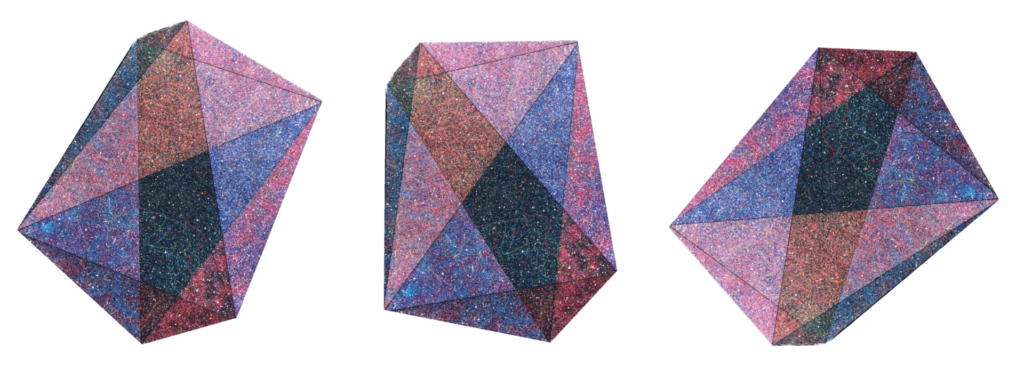 Voyager Series, 1995
Acrylic on Canvas, 120 x 150 cm
Both the aesthetic aspects of this description as well as the environmental implications of an interdependent and interconnected universe stimulated me deeply.
Based on the description of the microcosmos found in particle physics, I developed a painting style and “pointillistic” painting technique that uses points and dabs of color as a visual metaphor for the sub-atomic universe which is the foundation for the material world that we inhabit. To this I added calligraphic lines to signify energy and motion and “signs and symbols” indicating our reliance on various languages to explain our observations and understandings. Over the years I developed various combinations of these painterly attributes and applied them to a variety of artistic expressions that have included abstract as well as hyper-realistic painting and three-dimensional sculptural artworks and objects. Through the act of painting on physical objects. I try to communicate the essence of the inner reality of all material in the perceivable universe. This can be described as looking at a form from the inside out.
The three-dimensional works included geometrically shaped and painted sculptures such as the Cosmic Dancer sculpture which was sent to the Mir space station in 1993, common objects such as paint brushes and furniture, and a series of naturally formed, painted stones called Philosopher’s Stones which I commenced in the mid 1990’s. As the Philosopher’s Stones are a precursor to the Cosmic Stones project some further explanation is needed.
The Philosopher’s Stones
Legend has it that an imaginary substance exists which was sought by alchemists in the belief that it would magically turn ordinary metals into gold or silver which would lead to tremendous wealth. Today, science and technology have become this imaginary substance, and their “magic” has created tremendous wealth and opportunity for our species. As we transverse the new millennium, our understanding about how to use this magic will determine the ultimate destiny and fate of our species. It has been said that humanity sometimes has a knack for creating the right technologies for the wrong reasons. As the Philosopher’s Stones were inspired by science, I believe them to be symbolic of our interdependent relationship and to the magic of science and technology and of our responsibility to how we use that magic.
My intent to send such painted stones into space adds a new dimension to these works and they now become Cosmic Stones by applying the “magic” of space technology.
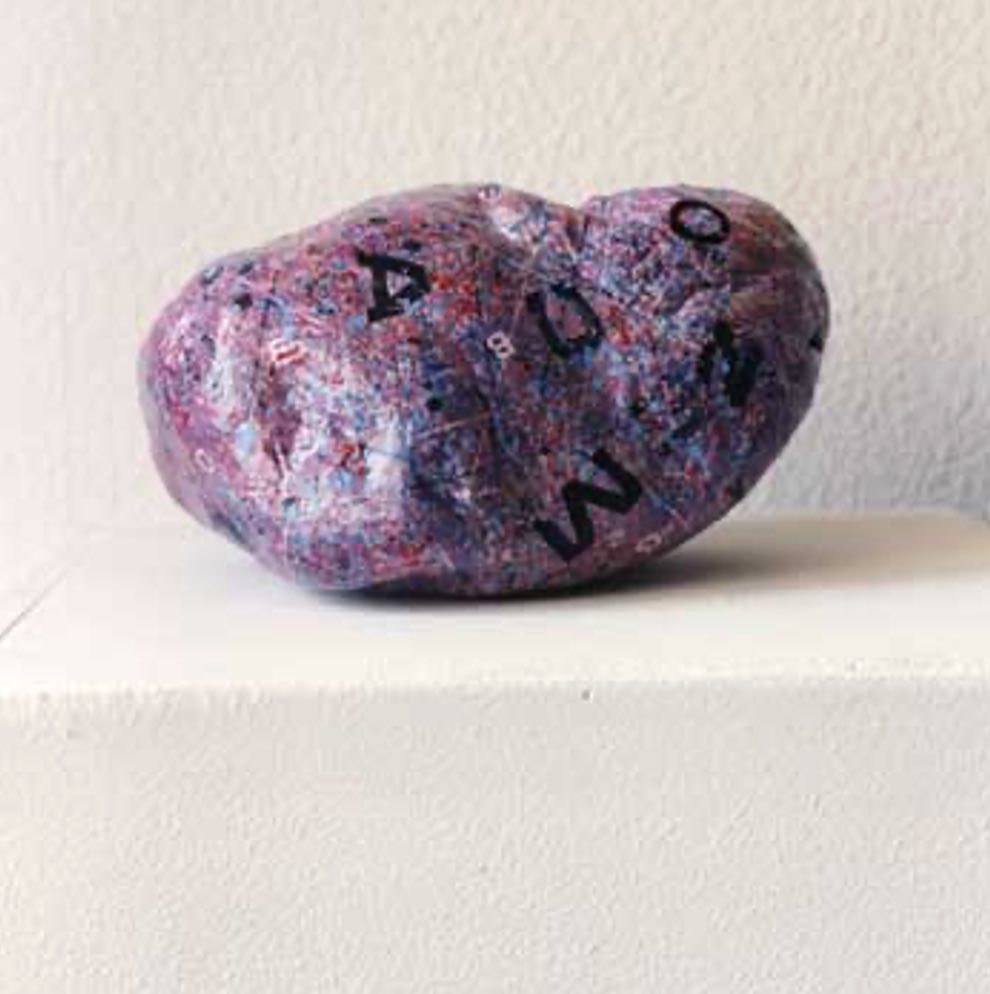
Philosopher’s Stone, 1994
Acrylic on Stone ca. 8 x 20 x 6 cm
Local and Personal Connections
The idea of making Cosmic Stones is also directly related to my recent move to the historic Swiss town of “Stein am Rhein” translated into English as: “Stone on the Rhine”. The local people refer to the village simply as “Stein”. The local inhabitants are called “Steiners”. Stein am Rhein is located at the beginning of the Rhine River as it flows from the Lake of Constance (Bodensee) on its way to the North Sea.
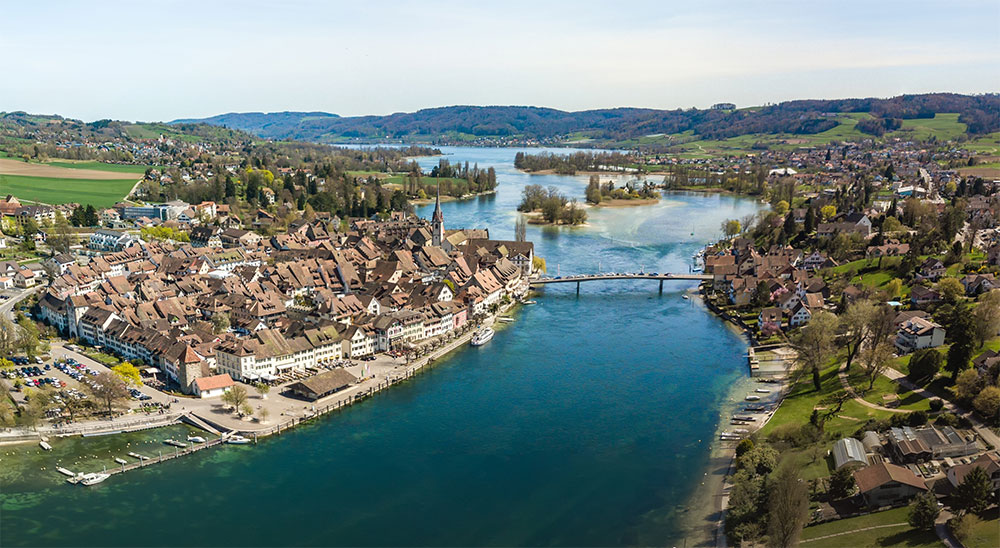
Stein am Rhein. Where the Lake of Constance (Bodensee) becomes the Rhine River
The stones I am using in the Cosmic Stones project obtained their final form through their journey from the Swiss mountains to the banks of the Rhine River next to where I live. They arrive serendipitously in “Stein am Rhein” where they I find them and prepare them for their ultimate journey into the cosmos.
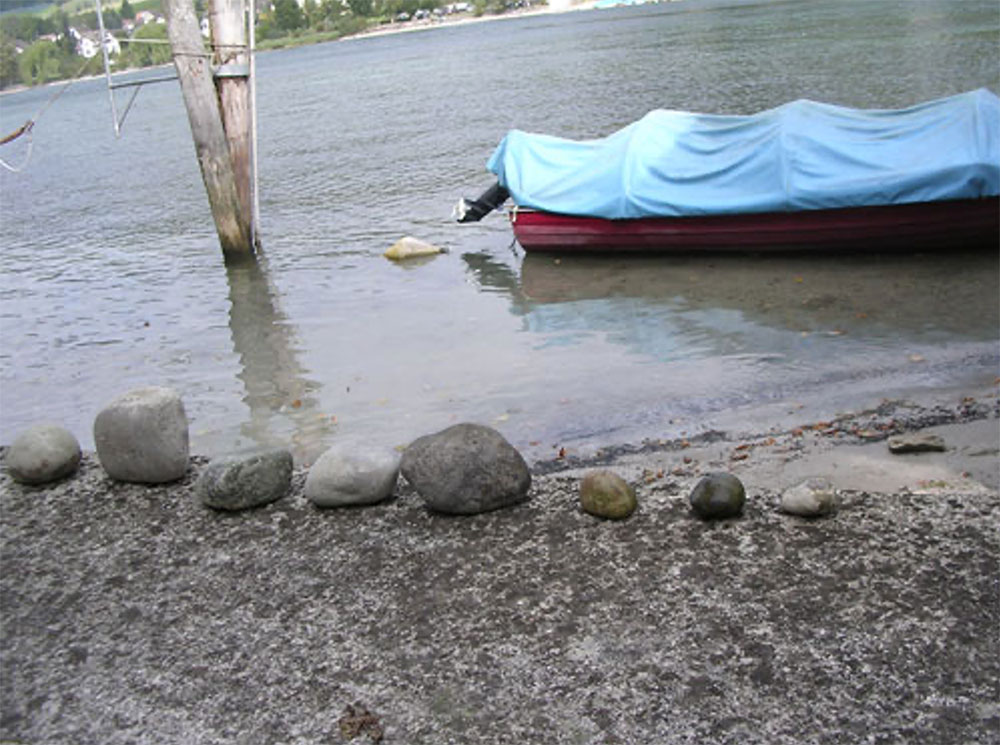 Stones found by my village in Stein am Rhein
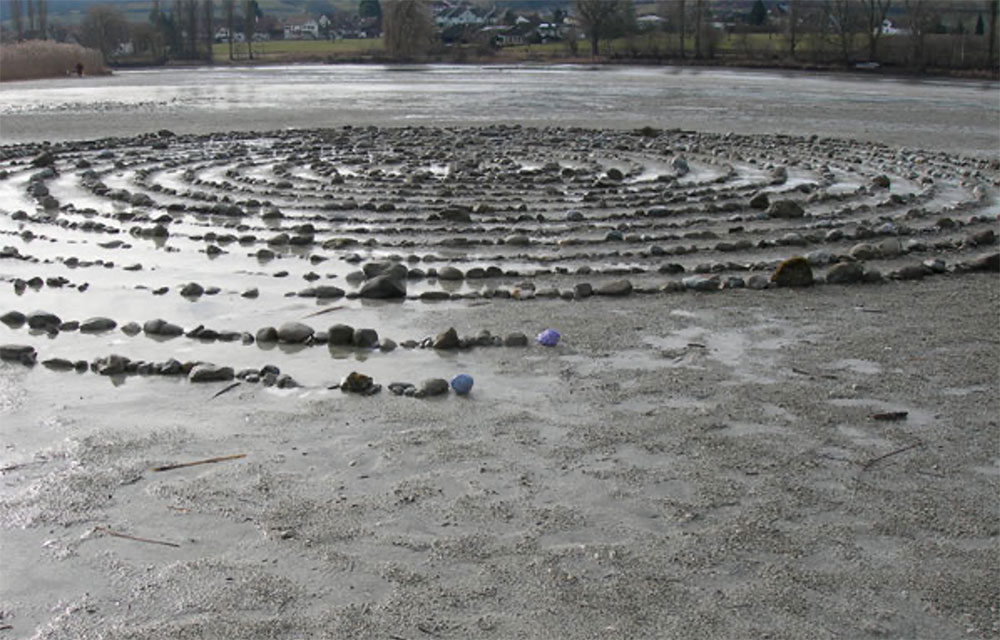 Stone spiral with two Cosmic Stones, Stein am Rhein, 2006
Recently it was pointed out to me that a source of my name “Arthur” comes from the Irish Gaelic word meaning “stone” [1].
The Cosmic Stones art intervention is a further development of both my three-dimensional painting and my art-in-space activities. The Cosmic Stones can be considered as “cosmic” artworks because they are designed to be sent into outer space. As they are also directly related to my current home and surroundings, they have a local and personal dimension.
The Cosmic Stones as Art Objects
I believe the process of natural formation endows the Cosmic Stones with a particular spiritual quality that relates to an archetypal consciousness of form. Natural forms contain a sublime sense of numinosity – the mystical and spiritual power of the elemental forces of nature that are embodied in an object.
The art historian Herbert Read [7] has written about this numinous quality of such forms in his book Modern Sculpture (1964) when he discusses the work of the sculptor Henry Moore. The mystical and spiritual – mana- is a quality of animistic vitality that informs all natural forms, not only of organic beings, but all inorganic things in so far as a structure has been given to these by growth (e.g. crystals) or by natural forces (e.g. the erosion of rocks by wind or waves). The artist is often acutely aware of what Baudelaire called ‘correspondences‘ – that is to say, real but irrational associations between disparate objects. To the poet these correspondences may be of color, sound or rhythm, but to the sculptor they are always of shape.
Read supplies this quote from the sculptor Henry Moore:
“There are universal shapes to which everyone is sub-consciously conditioned and to which they can respond if their conscious control does not shut them off. ……. I have always paid great attention to natural forms, such as bones, shells, and pebbles, etc. Sometimes for several years running I have been to the same part of the sea-shore – but each year a new shape of pebble has caught my eye, which the year before, though it was there in hundreds, I never saw. Out of the millions of pebbles passed in walking along the shore, I choose out to see with excitement only those which fit in with my existing for- interest at the time. A different thing happens if I sit down and examine a handful one by one. I may then extend my form-experience more, by giving my mind time to become conditioned to a new shape?” [2]
James Lovelock has pointed out in his book The Ages of Gaia – A Biography of Our Living Earth – that Life is an intricate, interconnected and self-regulating planetary system consisting of our atmosphere, the organisms, the oceans and the Earth’s crust including its ‘stones’. Together these make up the phenomena of “Life” – a super organism he refers to as Gaia. Lovelock states:
“. the growth of an organism affects its physical and chemical environment; the evolution of the species and the evolution of the rocks, therefore, are tightly coupled as a single, indivisible process.” [3]
Seen in this context, the Cosmic Stones also become messengers of Life from Earth.
Archetypal Consciousness of Form
In their terrestrial form the Cosmic Stones are painted stones. By painting them in my pointillistic technique described above, I attempt to visually portray the inner dimension of the stones which, in a symbolic manner, represents the atomic composition of all matter in the Universe. Everything, at least everything we know to be physical reality, is made up of minute particles of matter spinning and shooting around in energetic ways. The geomorphic forms that the stones have taken define their momentary and transitory reality as a physical object.
Like all material forms in the Universe, the Cosmic Stones are transitory. Some forms are more transitory than others. A raindrop has a very limited lifetime before it loses its form and becomes absorbed in the fundament of the environment. People, too, don’t last very long on the cosmic scale of time. Organic forms are especially transitory through the constant inter-exchange of matter with the environment. Although the Cosmic Stones are very solid and durable objects of concentrated matter, eventually they will – at some point in time – become dust. All of my art concerns this cosmic and transient quality of nature.
One obvious characteristic of the Cosmic Stone is that stones are dense and heavy. This density of mass subjected to the pull of gravity which determines an object’s weight – the gravitational constant. The weight is an indication of the energy that is embodied in a particular stone. As such, the Cosmic Stones exist as art objects that combine qualities of painting with the aspects of form. While the Cosmic Stones are physical, three-dimensional objects they cannot be classified as sculptures as they are not man-made. Their forms have been determined by the effects of erosion encountered on their long journey as rocks separated from the mountains of their origin, subsequently having been passed down the mountain streams to the Rhine River where they were deposited on banks of the river before being collected, painted by me and transformed into Cosmic Stones.
I believe the process of natural formation endows the Cosmic Stones with a particular spiritual quality that relates to an archetypal consciousness of form. Natural forms contain a sublime sense of numinosity – the mystical and spiritual power of the elemental forces of nature that are embodied in an object.
The Transformation of Form through Painting and Process
By isolating the stones from their natural environment and selecting them to become artworks, as an artist I have effectively, although momentarily, altered their destiny as normal terrestrial stones. Through the application of my microcosmically inspired painting technique, I have attempted to expose the inner, numinous aspects of these found and naturally formed objects. By pointing them into the direction of the cosmos by identifying and accessing launch possibilities that will take the stones into micro-gravity environments and beyond, I have added another cosmic dimension that makes them Cosmic Stones.
The Suitability of the Cosmic Stones in the Space Environment
Material Aspects
Other than the obvious weight and logistical characteristics of the Cosmic Stones selected for spaceflight, there appears to be no technical obstacles to their eventual manifestations on spacecraft, space habitats or placement on the surfaces of other planetary bodies.
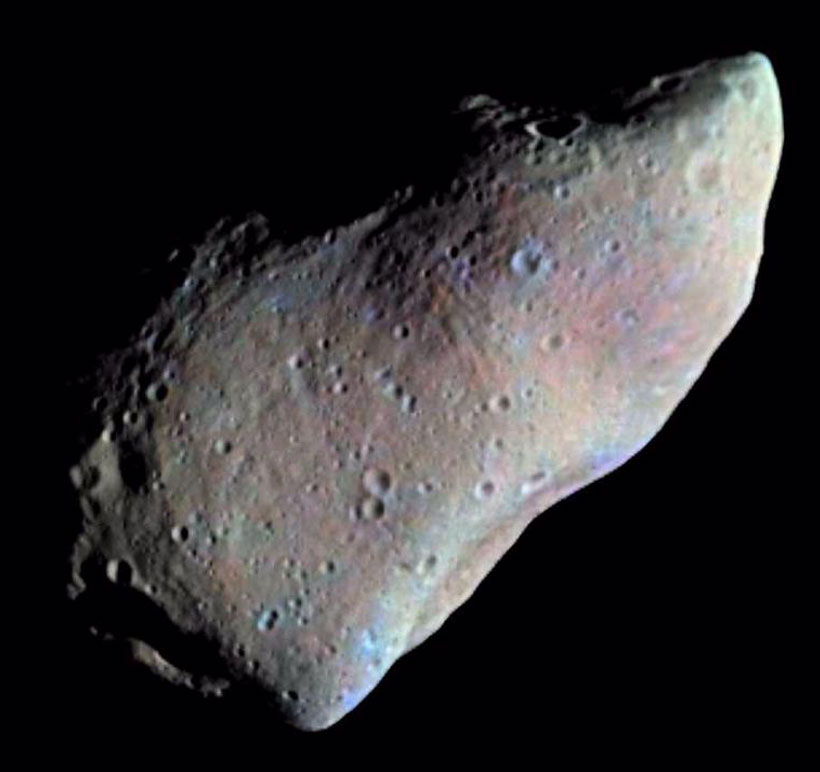
This picture of asteroid 951 Gaspra was obtained by the Galileo spacecraft during its approach to the asteroid on 29 October, 1991. Photo: ESA
Indeed, the geomorphic shapes of the Cosmic Stones – formed by the terrestrial natural forces on planet Earth share a interesting “Correspondence” with other celestial entities. They exhibit a striking similarity to asteroids which have been eroded, not by water and wind, but by numerous impacts from other asteroidal materials. Likewise, a liquid substance such as water in weightlessness forms itself into a rounded bio-morphical form due to the attractive force of surface tension of the water molecules.
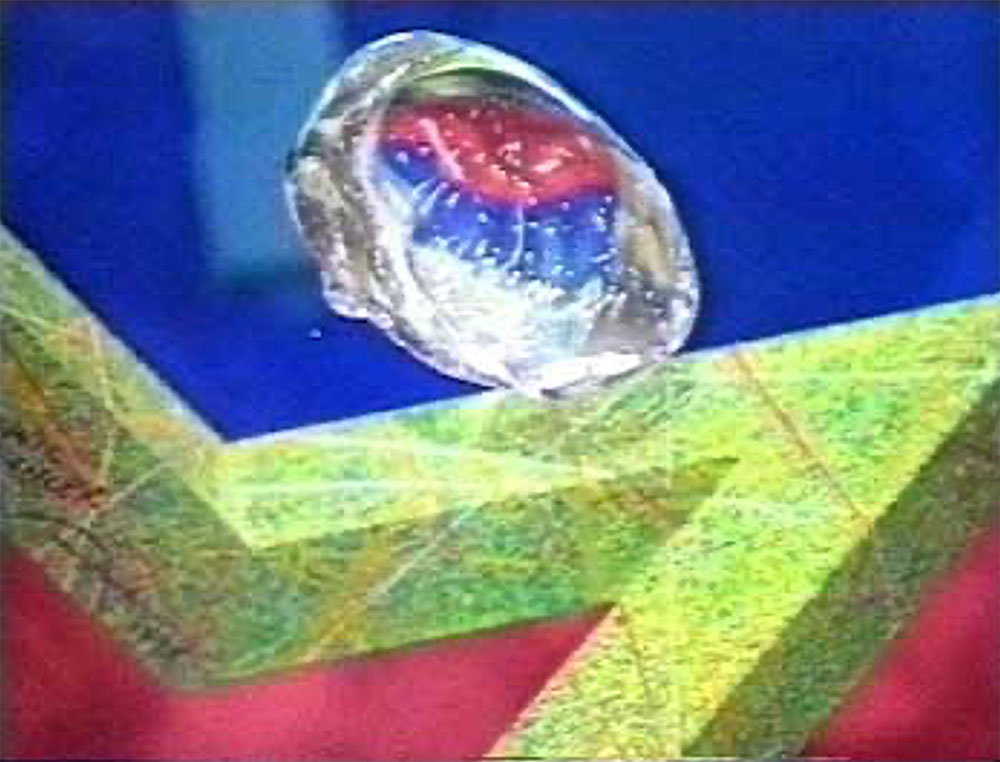 A globule of water next to the Cosmic Dancer sculpture on the Mir space station. 1993
Concerning their suitability for integration in crewed environments such as space stations and future interplanetary spacecraft, the material of the Cosmic Stones is non-flammable and durable. The edges of stones are blunt and rounded.
The acrylic paints which will be used are Lascaux Artists Paints which have been tested by the Russian space agency for their approved use in the closed environment of a crewed space habitat (Mir space station). These paints exhibited no toxic out gassing or other issues. Lascaux paints were used for the Cosmic Dancer sculpture [10] flown to the Mir in 1993 and on the twenty artworks selected for the Ars Ad Astra project sent to Mir as a part of the ESA Euromir95 mission.
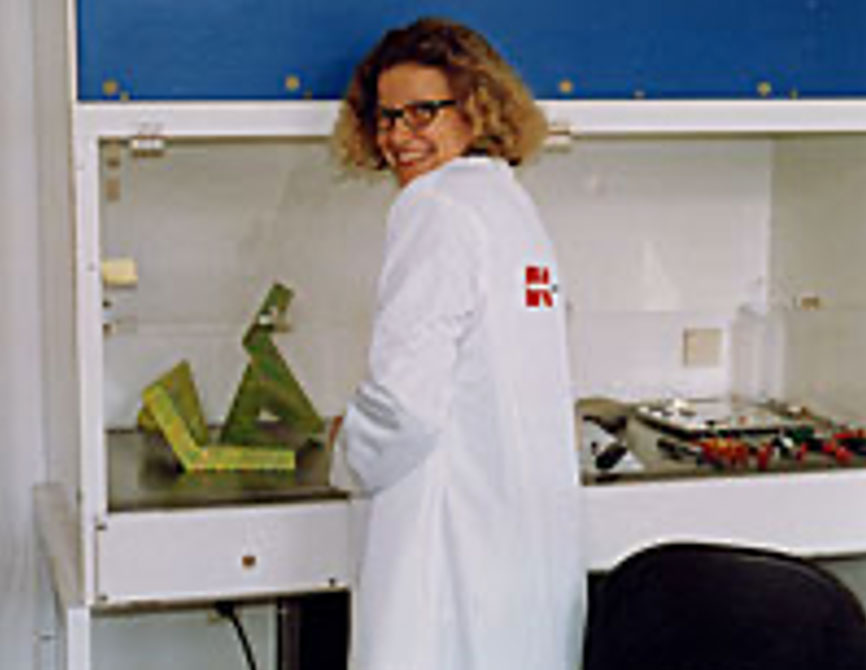 Preparation of the Cosmic Dancer sculpture with Claudia Kessler at Kayser-Threde GmbH, Munich, Germany
The Cosmic Stones selected for spaceflight to a crewed habitat will receive a final varnish consisting of a two-component epoxy coating which will enable the Cosmic Stones to be sterilized with alcohol in order to prevent the introduction of bacteria and fungi into the space habitat – a process that was employed by the German Aerospace Company Kayser-Threde GmbH in the preparation of the Cosmic Dancer sculpture for transport to the Mir space station in 1993.
Psychological Aspects for Astronauts
It has been shown and reported that astronauts and cosmonauts on long duration mission in Earth orbit specifically appreciate the presence of objects that bear a strong relationship to the home planet. The color, form and the tactile qualities of art objects sharing the somewhat cramped living quarters of the crews are also very important characteristics.
Cosmonaut Alexander Polischuk speaking about the qualities of the Cosmic Dancer sculpture on the Mir space station in 1993:
“When the Progress arrived and we unwrapped the sculpture, we were very pleased as it was like we saw an old acquaintance. But we were quite surprised as the color of the sculpture was different than the training model – it was green! But it was maybe even better so. The combination of the light green and yellow color has a more calming effect and this is very important for us in stress situations.”
“One can see in this figure any being one wants. Therefore, it is interesting to enjoy looking at it and to hold it in one’s hands. When holding it in one’s hands, one caresses it and feels a cozy feeling, as if one would hold a living being. We think that such art works are not only important to the artists who send them into space but also for us cosmonauts who simply feel the presence of a little artwork as comfortable.” [4]
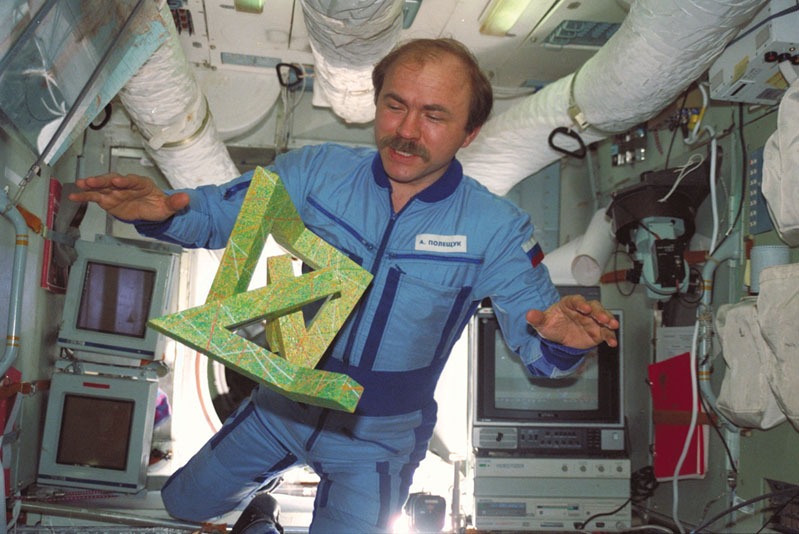 Cosmonaut Alexander Polischuk and the Cosmic Dancer on the Mir space station, 1993
ESA astronaut Thomas Reiter speaking about Ars Ad Astra: The 1st Art Exhibition in Earth Orbit.- Mir Space Station/Transinne, Belgium link-up, November 30, 1995:
“…..and let me tell you that there are many things here on board which keep us alive, of course technical systems which produce oxygen to breathe, water to drink which clean the air from carbon dioxide, food and all these things which help to keep us alive, life support systems. But I can tell you that this kind of thing (he holds up a painting) are a part of what is necessary to keep us alive, to keep the memory to the Earth, to our families, to our friends, to the nature.” [5]
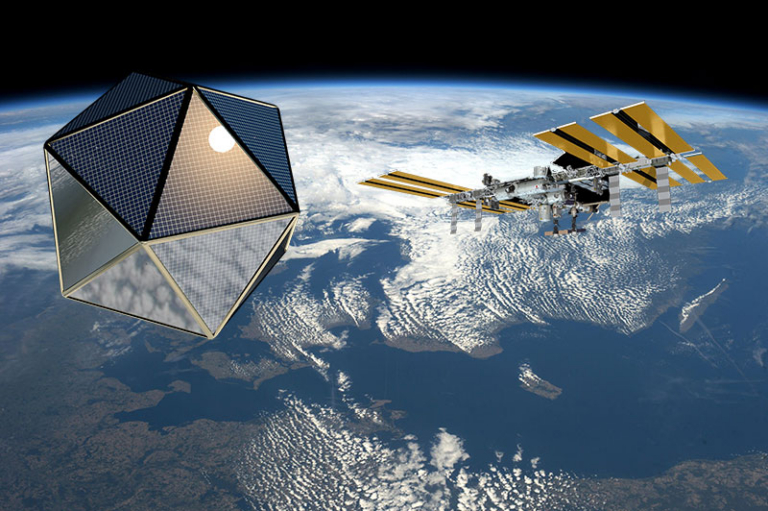
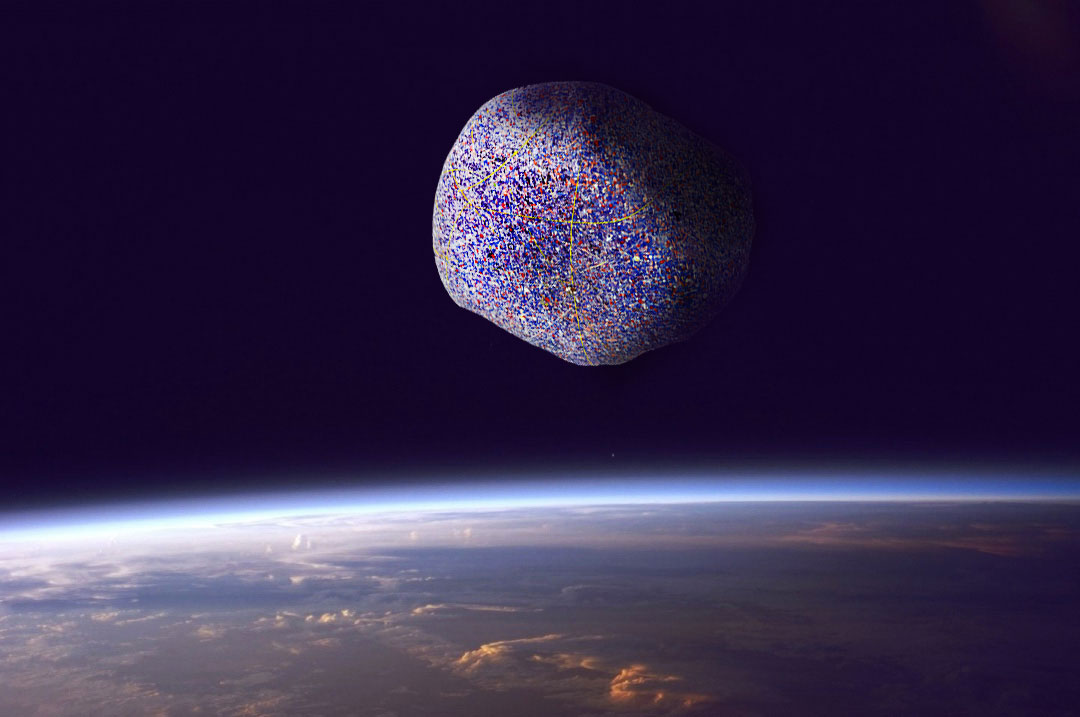
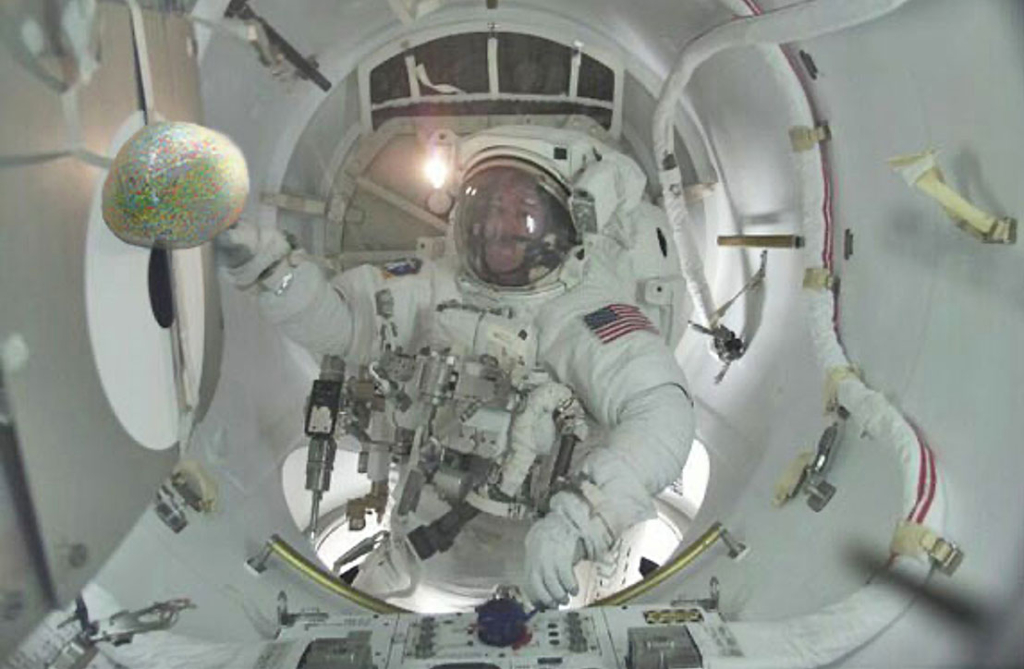 Artist’s Conception of a Cosmic Stone on the ISS
The Cosmic Stones are artworks that seem especially suited for integration in crewed environments in space as they:are art objects that are during their own journey which began hundreds if not thousands of years before in the fundament of the home planet where they were given their present shape by the natural forces of Earth:
- have been endowed with numinous qualities inspired by insights into the nature of the universe derived from our explorations into the microcosmos,
- are composed of a benign and non-flammable material,
- their shapes are blunt and rounded,
- utilized art materials that can be considered as “space qualified” by their use on previous space missions involving crewed environments,
- can be easily sterilized to prevent bacterial or fungal infections,
- are finished in an artistic manner that combines aspects of color, form and tactility that would appear to be psychologically beneficial to human crews on missions in Earth orbit and beyond.
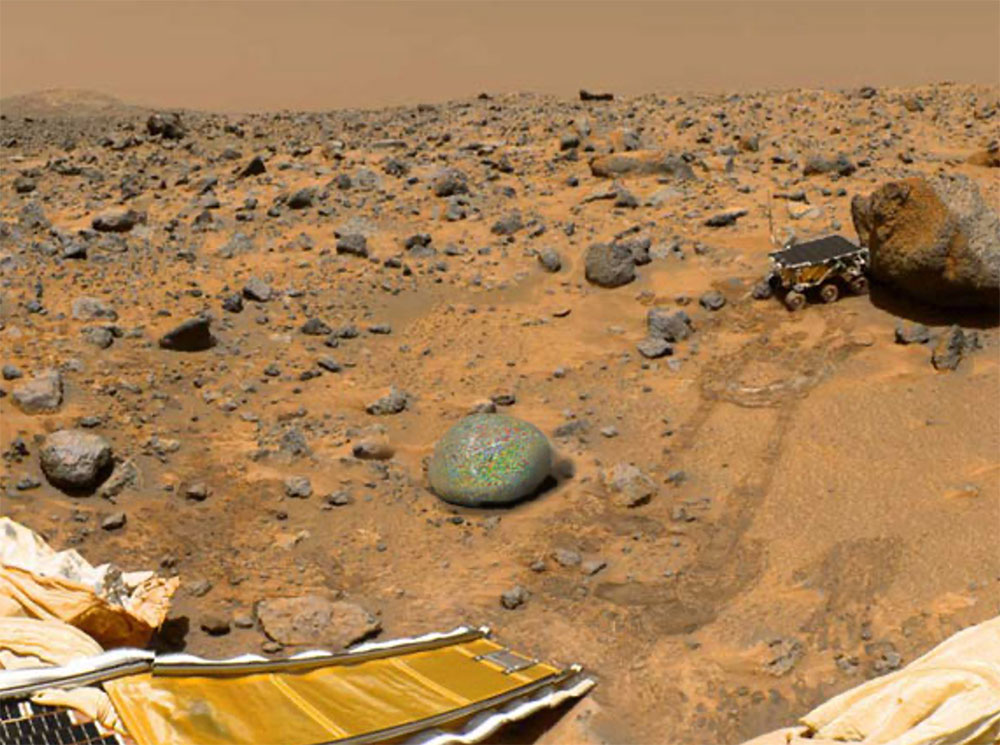
Artist’s Conception of a Cosmic Stone placed on Mars
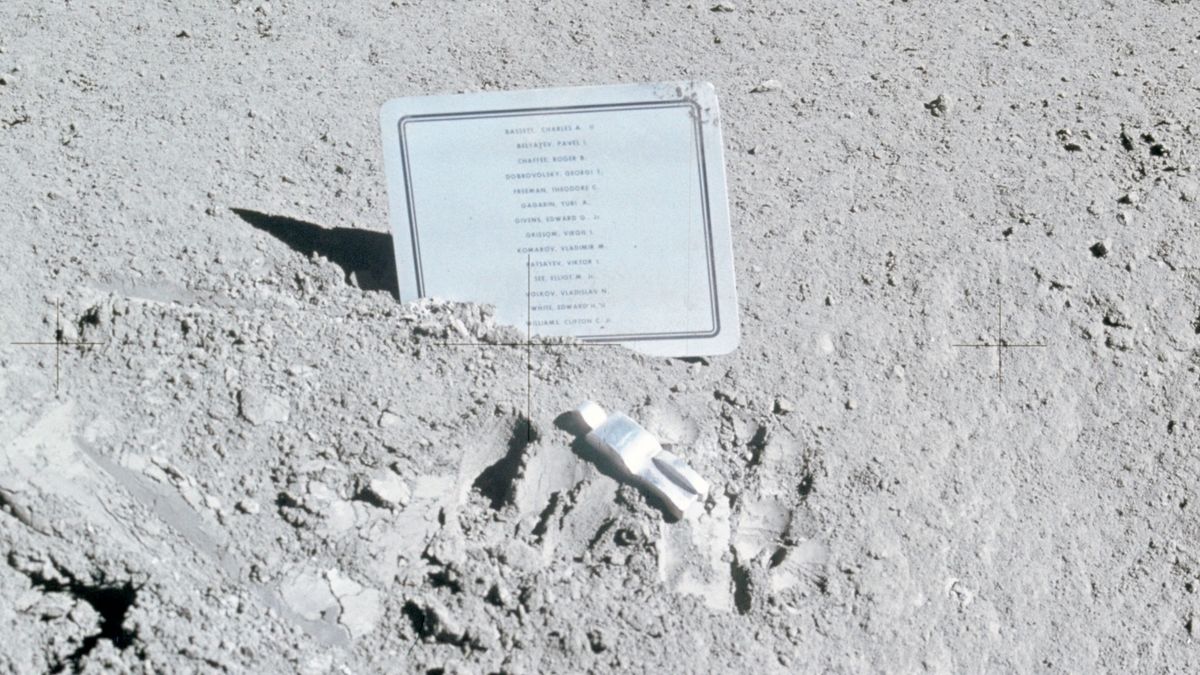
The Cosmic Stones also appear to be suitable artifacts to take to and leave as human markers on other celestial bodies in the Solar System such as the Moon or Mars. Their inert composition endows the Cosmic Stones with qualities of durability and ease of handling. Likewise, with proper preparation and sterilization procedures any biological contamination risk to extra-terrestrial environments can be minimized. Special UV resistant varnishes will be used to reduce or hinder the effects of UV radiation that will impose a deteriorating effect on the acrylic paints in the long term. Personal experience with outdoor sculptures painted in this manner has shown an acceptable terrestrial lifespan of plus twenty years. The effect of extreme temperature fluctuations on the painted surface needs to be examined in more detail and such an investigation would be integrated into any feasibility study once a launch opportunity to another celestial body becomes defined.
Our Future: Will it be a “Space Age” or a “Stone Age”?
“We face a choice of the type of future that we leave to posterity: a stone age or a space age. If it is to be a space age there is a need to act now with much greater vigor that is currently being shown.”
Mark Hempsell, 1989 [5]
A Stone Age?
A “No” answer to this question implies that our species will either somehow find a combination of terrestrial solutions to comfortably accommodate 8-10 billion people in the coming decades; or nature (including human nature) will drastically reduce the human population to more sustainable levels. It has been estimated that the carrying capacity of the planet’s ecology can comfortably sustain a human population of just 1.5 billion people at the living standards of Western society.
With the impact of 200 hundred years of industrialization based on a fossil fuel economy which many scientists believe is upsetting the climate balance in unpredictable and unmanageable ways and the fact that wars have already begun over vital resources, the likelihood of a mass reduction of the human population appears to be a definite possibility. Without any alternative to modern society in place, once our fossil fuel economy collapses during climatic upheaval, one could imagine that our civilization would quickly slide into a post-industrial “Stone Age”.
A Space Age?
A “Yes” answer implies that our species recognizes this fact and tries to understand why it has reached this point in its own evolution in the context of the evolution of life on Earth.
A cosmological explanation is that Mother Earth has come of age and it is now time for it to sow its seeds throughout the cosmos in the hope that one or more of them will catch, begin to grow and flourish as Life has on Earth.
Seen in this context, it has taken planet Earth 4.5 billion years of time to reach this opportune moment. Humanity has undergone over 2 million years of evolution capped by the last 200 years of accelerated technological development and some 40 years of spaceflight experience. The development of spaceflight – the ability to visit other planets – is perhaps, the most significant development, not only in the history of our species, since the appearance of life itself on our planet.
The result of this unprecedented industrial, technological and scientific development that has led to our current predicament has also provided the means for our species to perpetuate our present civilization and indeed to promote the survival of humanity. To do so it will need to harness the infinite resources beyond the atmosphere of our planet to 1. meet the needs of human society on Earth while 2. creating an infrastructure in space for further human expansion in the cosmos.
This scenario for humanity is called: “The Space Option”.
References:
- The meaning of “Arthur”: http://www.thinkbabynames.com/name/1/Arthur
- Herbert Read, Modern Sculpture – A Concise History (London, Thames & Hudson, 1964, 1992) pp. 178
- James Lovelock, The Ages of Gaia – A Biography of Our Living Earth (London, Oxford University Press) 2nd Edition 1995 pp. 60-61
- 1994 Arthur R. Woods, Art In Space: The Spaceflight of the Cosmic Dancer Sculpture – Article published in Earth Space Review. Vol. 3. No. 2. April-June.
- 1989, Mark Hempsell. Space Industrialization — A New Perspective. Spaceflight 31[07], 224-227.
Related Posts